

Employee engagement and productivity are not just HR buzzwords; they are fundamental drivers of organisational performance and wellbeing. Globally, research from Gallup (2023) shows that only 23% of employees are engaged at work, meaning the majority of the global workforce is either disengaged or actively disengaged. The cost of this disengagement is staggering, amounting to nearly US$8.8 trillion in lost productivity annually.
Within Australia, the data mirrors this challenge. According to PwC and the Australian HR Institute (2022), disengaged employees are estimated to cost organisations an average of $6,000 to $10,000 per employee per year in lost productivity. The opportunity for improvement is immense and achievable.
At Leading Wellness Solutions, we work with leaders and organisations to bridge this gap. Engagement is the psychological and emotional connection an employee has with their work, team, and organisation. When employees are engaged, they bring more energy, creativity, and purpose to their roles leading to higher productivity, lower turnover, and better mental health.
What Research Says About Engagement and Productivity
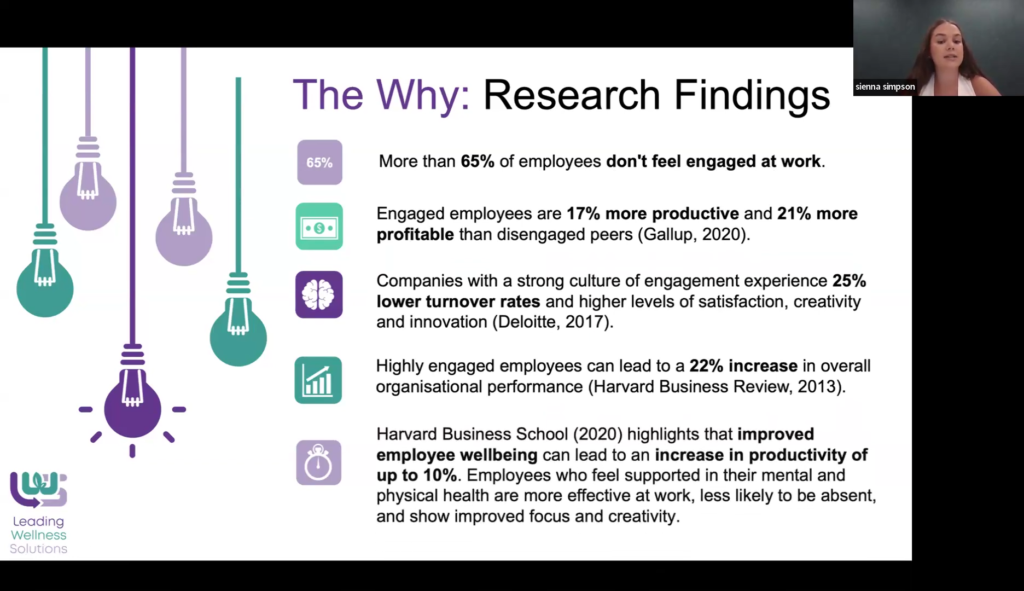
Let’s start with some key statistics that illustrate the business case for engagement:
- 65% of employees report feeling disengaged at work (Gallup, 2023).
- Engaged employees are 17% more productive than disengaged ones.
- High engagement correlates with 21% higher profitability and 25% lower turnover.
- Organisations with strong engagement cultures report a 22% improvement in overall performance (Harvard Business Review, 2022).
- Improving employee wellbeing can increase productivity by up to 10% (Harvard Business School, 2021).
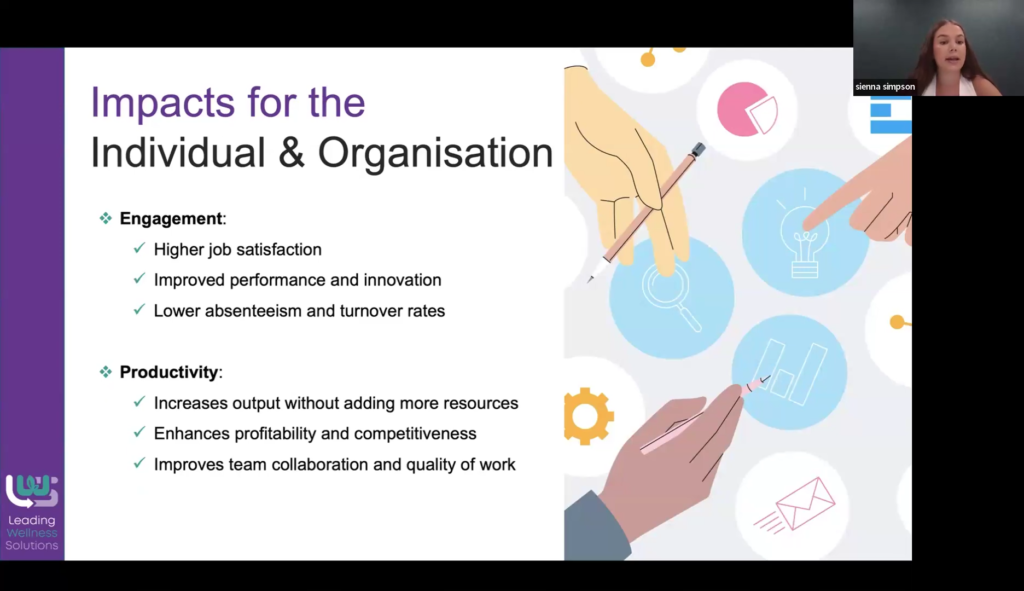
These numbers make it clear: engagement isn’t just a “nice-to-have” – it’s a measurable performance enhancer and a vital element of workplace sustainability.
The Psychology of Engagement: Four Foundational Theories
Self-Determination Theory (SDT)
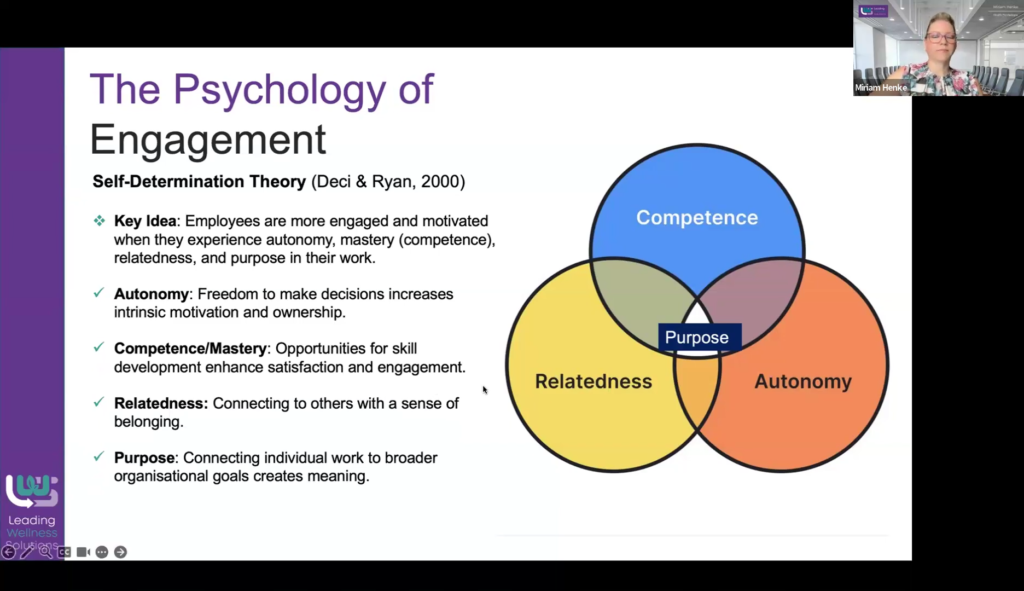
Developed by Deci and Ryan (2000), SDT identifies three key needs that drive engagement: autonomy, mastery, and relatedness.
- Autonomy: The freedom to make decisions fosters ownership and intrinsic motivation.
- Mastery: Opportunities to develop competence enhance satisfaction and performance.
- Relatedness: Feeling connected to others builds belonging and trust.
When these needs are met, engagement naturally rises. Conversely, environments that stifle autonomy or fail to provide growth opportunities often erode motivation and productivity.
Flow Theory
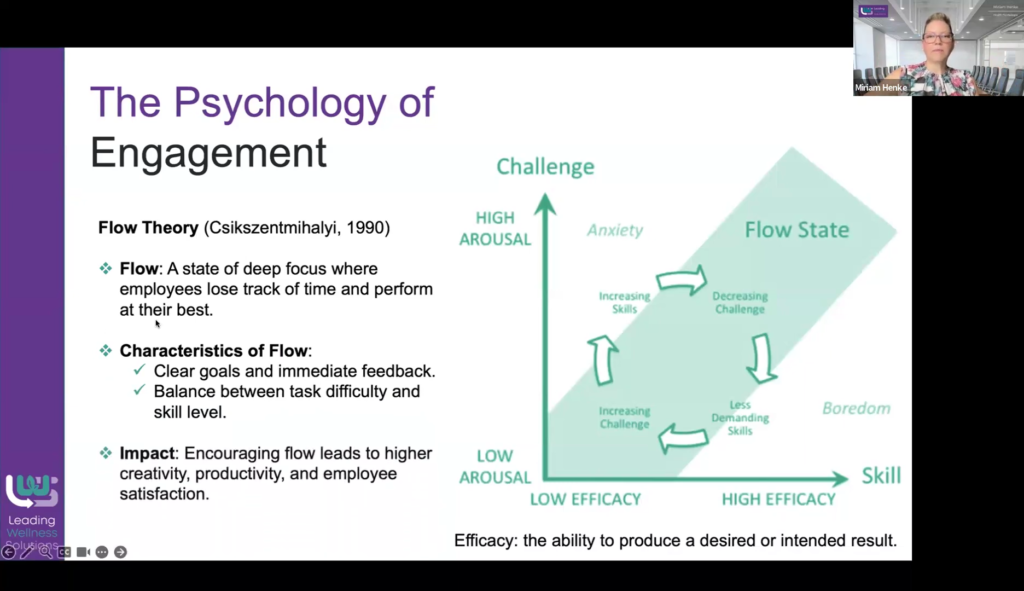
Popularised by psychologist Mihaly Csikszentmihalyi, flow is a state of deep focus and satisfaction that occurs when skill and challenge are balanced. Employees in flow lose track of time, perform at their peak, and experience intrinsic joy in their work. Creating conditions that encourage flow such as clear goals, immediate feedback, and manageable challenges leads to higher creativity and sustained productivity.
Psychological Safety
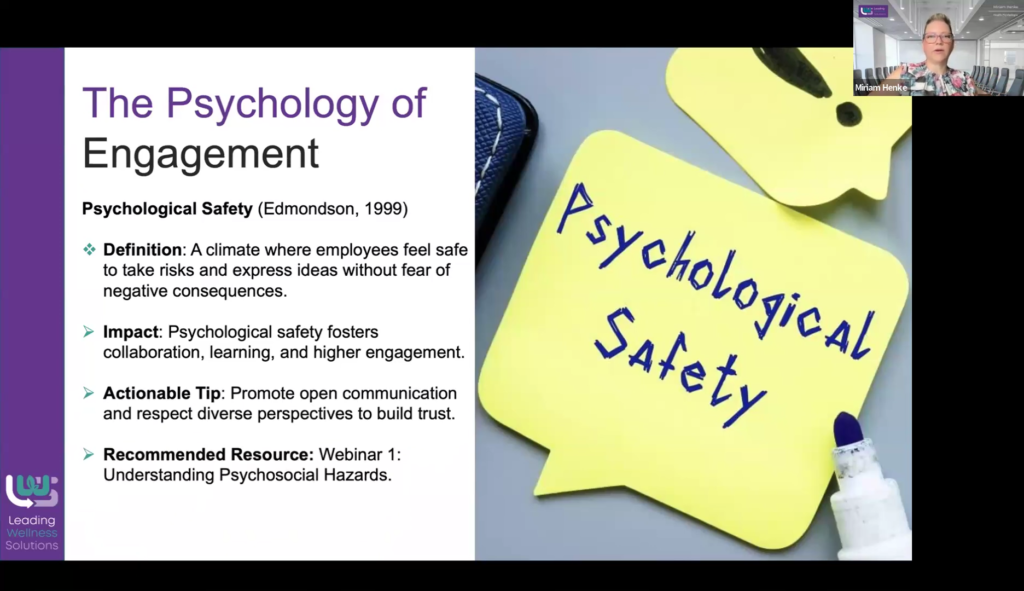
Coined by Amy Edmondson (Harvard Business School), psychological safety describes an environment where employees feel safe to speak up, share ideas, and take risks without fear of retribution. Teams that prioritise psychological safety are more innovative, collaborative, and adaptive. In fact, Google’s Project Aristotle found it to be the single most important factor distinguishing high-performing teams (Google, 2015).
The Burnout Model
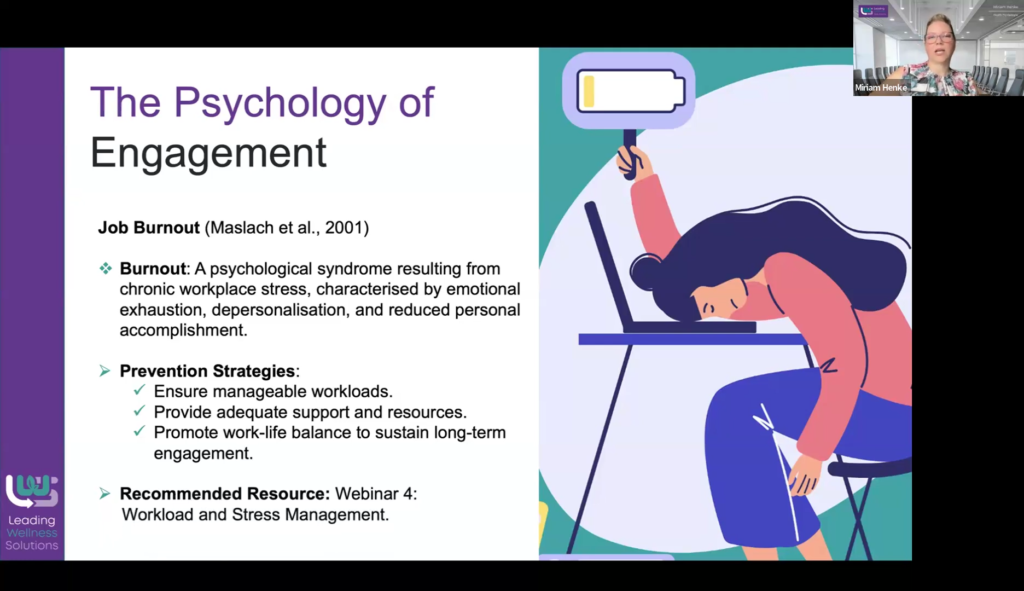
As burnout rises globally, it’s crucial to understand its impact on engagement. The World Health Organization defines burnout as a syndrome resulting from chronic workplace stress. It manifests as exhaustion, cynicism, and reduced professional efficacy. Preventing burnout requires managing workloads, promoting recovery, and offering ongoing support through employee assistance programs (EAP) alongside leadership training, giving employees confidential access to psychological support before stress escalates into disengagement or attrition.
The Seven Core Drivers of Employee Engagement
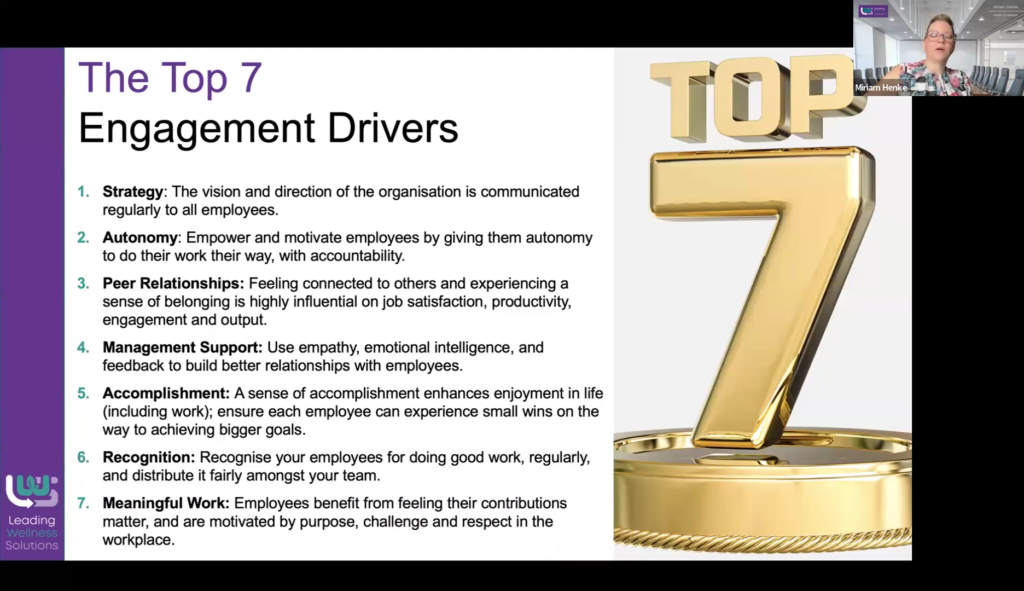
After working with hundreds of organisations, we’ve identified seven engagement drivers that consistently predict higher productivity and satisfaction:
- Clear Strategy: Communicate a compelling vision and shared purpose. Employees need to understand how their role contributes to the bigger picture.
- Autonomy: Empower employees with control over how they work while maintaining accountability.
- Peer Relationships: Encourage connection, trust, and collaboration. Social belonging enhances job satisfaction and resilience.
- Management Support: Emotionally intelligent leaders who coach rather than command build lasting loyalty.
- Accomplishment: Set achievable goals and celebrate progress; small wins matter.
- Recognition: Regular, fair, and authentic recognition fuels morale and motivation.
- Meaning: Help employees connect their work to personal and organisational values.
Each of these drivers aligns with the principles of positive psychology and modern leadership. When applied consistently, they transform engagement from a metric into a mindset.
10 Evidence-Based Strategies to Boost Engagement and Productivity
Flexible Work Arrangements (FWAs)
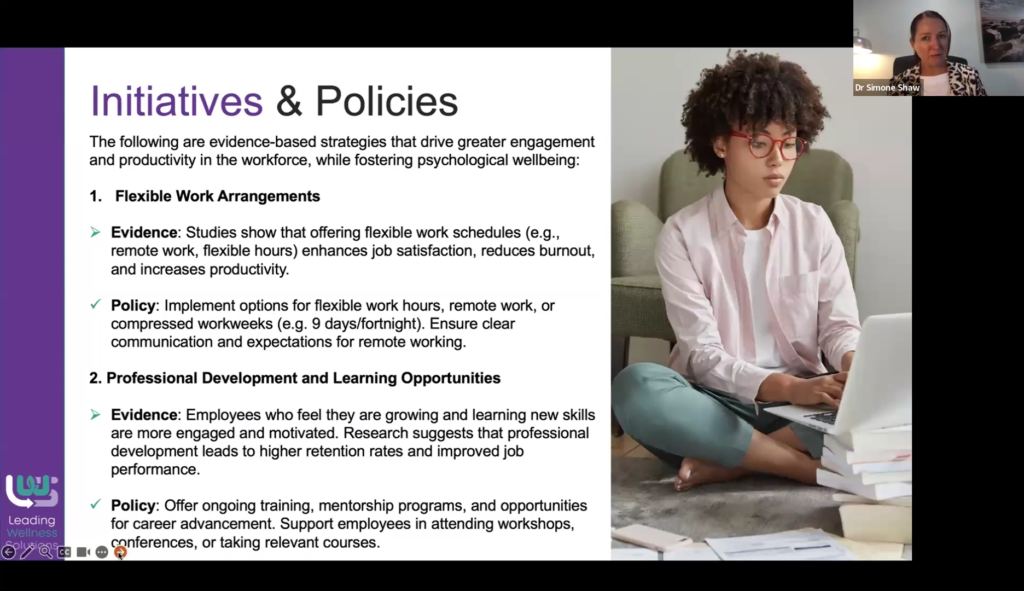
Remote work and flexible hours enhance wellbeing, reduce stress, and increase productivity. According to Microsoft’s Work Trend Index (2023), employees with flexible options report 29% higher productivity and greater job satisfaction.
Continuous Professional Development
Invest in ongoing learning across all levels,not just leadership. Research by LinkedIn Learning (2022) found that 94% of employees would stay longer with a company that invests in their career development.
Recognition and Rewards Systems
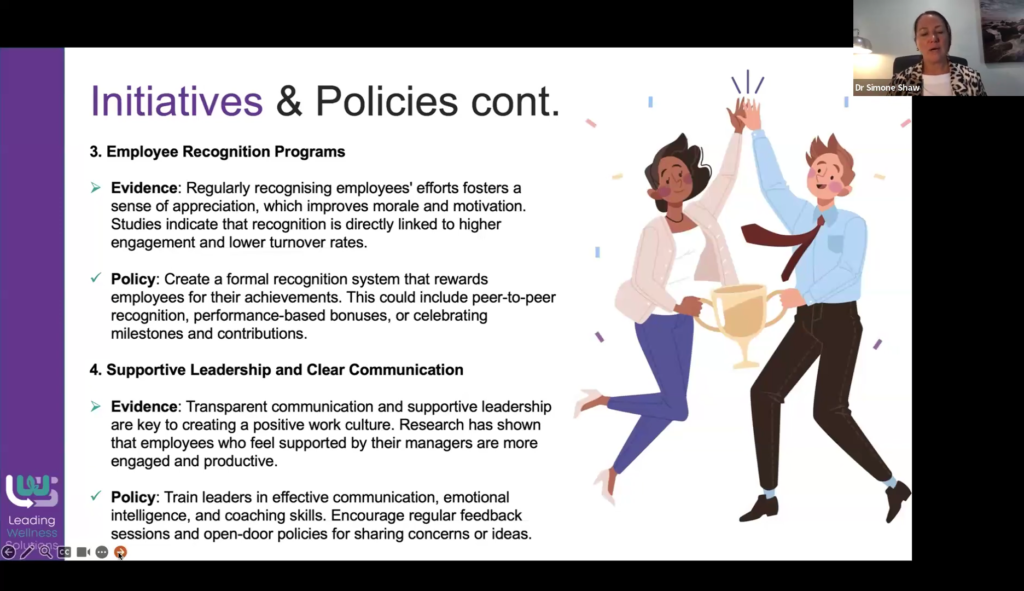
Recognise both team and individual achievements. Peer-to-peer recognition can be especially powerful. According to OC Tanner Institute (2022), frequent recognition results in 31% lower turnover and 12x higher engagement.
Supportive and Emotionally Intelligent Leadership
Leaders who listen, empathise, and communicate clearly inspire trust. Training managers in emotional intelligence correlates with a 20% improvement in team performance (Hay Group, 2020).
Mental Health and Wellbeing Programs
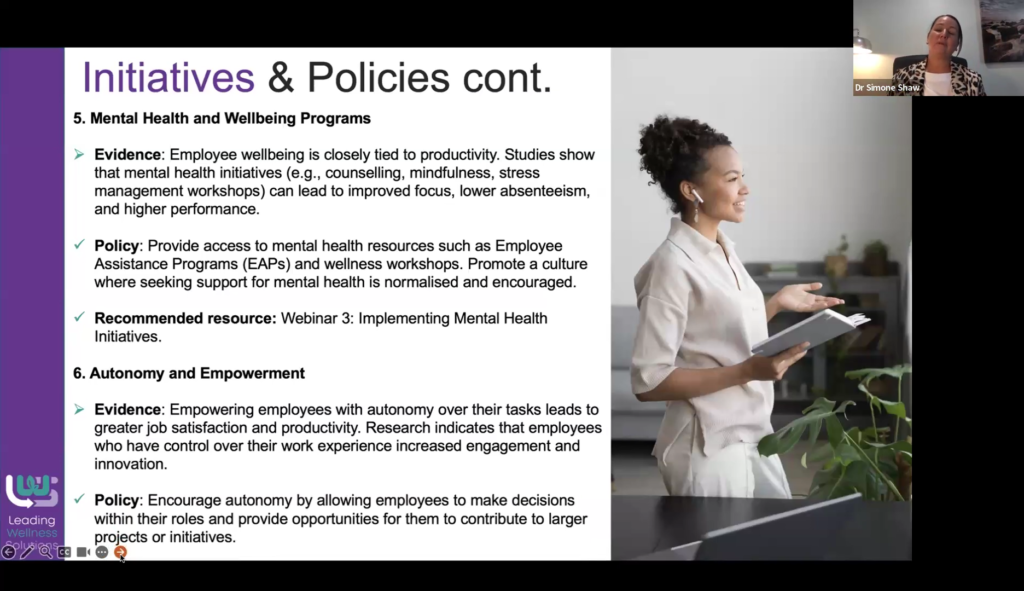
Wellbeing initiatives, such as mindfulness sessions, EAP programs, and mental health training, improve focus and lower absenteeism. PwC’s ROI analysis (2020) found that every $1 invested in mental health returns $4 in productivity gains.
Autonomy and Empowerment
Allow employees to make decisions and own their work. Harvard Business Review (2022) reports that autonomy increases intrinsic motivation and innovation, particularly in hybrid workplaces.
Diversity and Inclusion
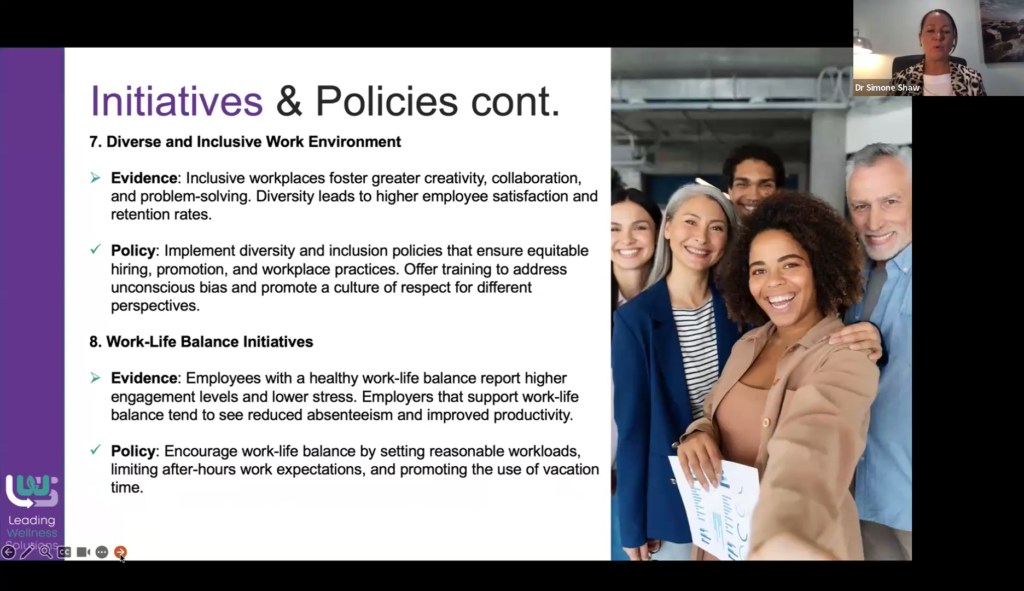
Diverse teams outperform homogenous ones. McKinsey & Company (2023) found that organisations with high gender and ethnic diversity outperform peers by 36% in profitability and 25% in creativity.
Work-Life Balance Initiatives
Encourage rest, realistic workloads, and use of vacation time. Employees who feel supported in maintaining balance are 2.5x more likely to report being engaged (APA, 2022).
Team Building and Social Connection
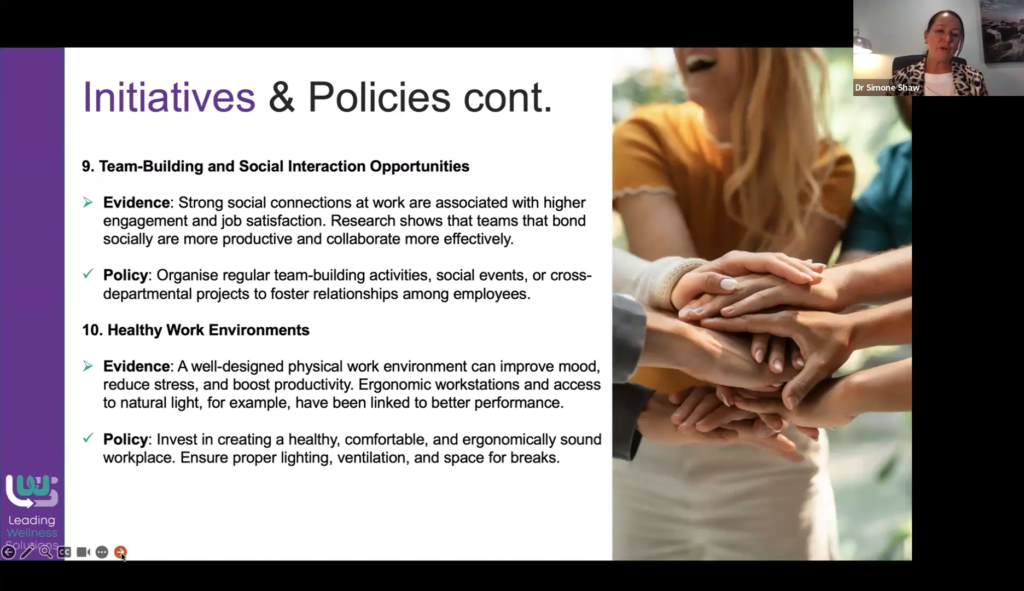
Humans are social beings. Team-based activities, cross-departmental projects, and community initiatives foster belonging and collaboration.
Healthy Work Environments
Design workspaces that promote wellbeing: natural light, ergonomic setups, greenery, and quiet zones. The WELL Building Institute (2023) notes that environmental factors can improve cognitive function by up to 25%.
Building a Culture of Trust and Psychological Safety
Trust is the cornerstone of engagement. When employees trust their leaders, they’re more likely to innovate, speak up, and stay loyal. Building trust requires consistent communication, transparency, and accountability.
Practical ways to build trust:
- Maintain open-door policies and encourage feedback.
- Admit mistakes and model vulnerability.
- Follow through on promises.
- Create a culture of shared responsibility, not blame.
Measuring Engagement and Productivity
You can’t improve what you don’t measure. The most effective organisations use both qualitative and quantitative methods to assess engagement.
- Employee Surveys: Gallup Q12 or custom pulse surveys.
- Performance Metrics: Productivity, absenteeism, and turnover rates.
- Feedback Loops: Regular 1:1 meetings and 360-degree feedback.
Tracking these over time provides insight into whether initiatives are improving engagement and where adjustments are needed.
Implementation Tips: Making Engagement Sustainable
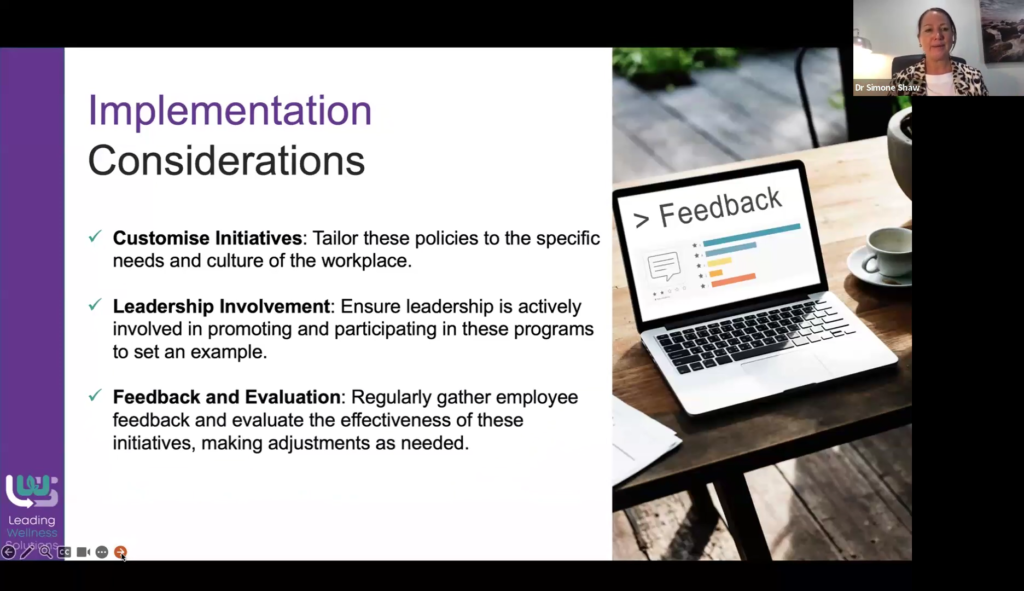
- Start at the top. Leadership buy-in is non-negotiable. Executives must model engagement behaviours.
- Tailor programs. Adapt initiatives to your organisation’s size, culture, and maturity.
- Gather feedback. Evaluate success through measurable outcomes and employee input.
- Celebrate milestones. Recognition reinforces positive change.
- Be patient. Culture transformation takes time but yields lasting rewards.
Final Thoughts: Engagement Is the New Productivity
Engagement is not about superficial perks, it’s about creating a culture where people feel valued, trusted, and inspired to contribute. When engagement thrives, productivity follows naturally.
As psychologists and organisational consultants, we’ve seen the transformative impact of aligning human wellbeing with business performance. The science is clear: when people are supported, challenged, and recognised, they don’t just work harder, they work happier.
Creating that culture takes intention, but the results are exponential.