

High workloads are among the most common and persistent causes of workplace stress. Research consistently shows that employees with excessive workloads are far more likely to experience burnout, mental health issues, and physical illness.
The Black Dog Institute (2021) found that high workload is one of the leading causes of burnout among Australian employees. Similarly, Beyond Blue in 2022 reported that chronically high workloads can trigger long-term conditions such as depression, anxiety, and even PTSD.

The Productivity Commission estimates that addressing workload-related mental health issues could save the Australian economy up to $17 billion annually through reduced absenteeism, presenteeism, and staff turnover. When organisations invest in managing workload effectively, they’re not just improving mental health in the workplace; they’re improving performance, retention, and profitability.
Recognising the Warning Signs of Workload Stress
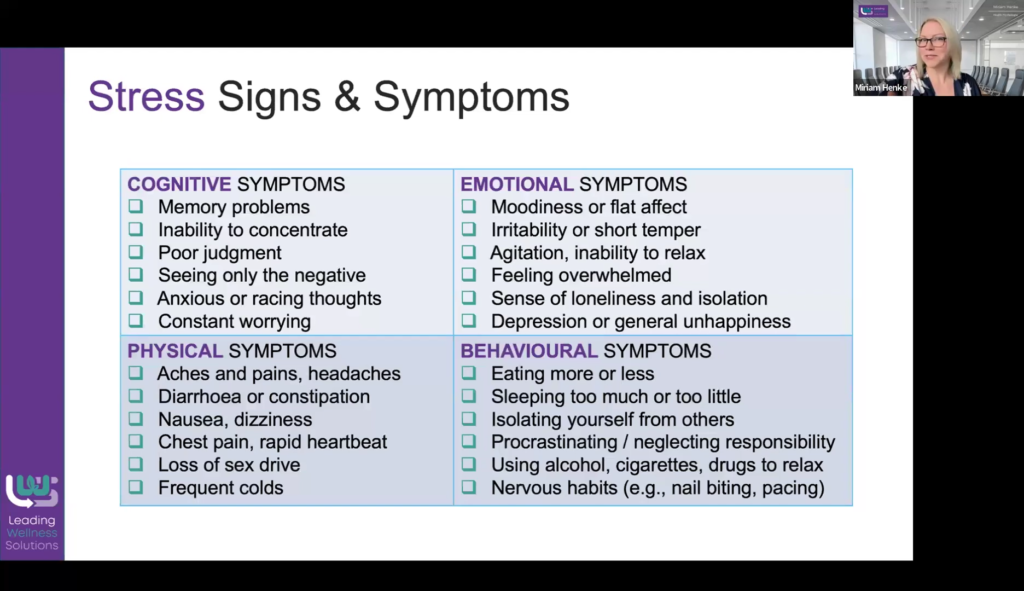
Stress manifests differently for everyone, but there are common cognitive, emotional, physical, and behavioural signs to watch for:
- Cognitive: Difficulty concentrating, memory lapses, decision-making problems.
- Emotional: Irritability, anxiety, tearfulness, or feeling overwhelmed.
- Physical: Fatigue, headaches, poor sleep, changes in appetite.
- Behavioural: Procrastination, withdrawal, unhealthy coping mechanisms, or substance use.
If you notice these symptoms in yourself or your team, it’s time to take proactive steps to maintain stress-free and positive work culture and address workload before it leads to burnout.
The Psychology of Workload: Why It Matters
Workload is not just about the number of tasks; it’s about how work is designed. Poor job design, conflicting priorities, unclear roles, and under-resourcing all increase perceived workload. According to Safe Work Australia’s psychosocial hazard framework (2023), poorly designed jobs are among the top contributors to psychological injury at work.
The Role of Job Design and Role Clarity
When employees understand what’s expected of them, how their success is measured, and how their role connects to organisational goals, they’re more confident and less stressed. A lack of role clarity creates confusion and anxiety, undermining both wellbeing and performance.
The Demand-Control Model
The demand-control model of occupational stress (Karasek, 1979) shows that when employees face high demands but have low control over their work, stress increases dramatically. Enhancing autonomy allows people to influence how they complete tasks and reduces stress and boosts motivation.
Common Causes of Workload Stress

- Poor job design: Lack of structure or unclear deliverables.
- Conflicting priorities: Competing demands from multiple managers or clients.
- Skill gaps: When staff lack the tools or training to perform effectively.
- Under-resourcing: Fewer staff or limited budget creating unsustainable pressure.
- Unrealistic expectations: From management or self-imposed standards of perfection.
- Procrastination and poor time management: A lack of planning compounds stress.
Identifying these sources helps leaders and employees target solutions where they matter most and manage psychosocial hazards at work proactively to build psychosocial safety and a stress-free environment in the workplace..
Time Management Pitfalls That Fuel Stress

Many professionals unintentionally increase their stress by mismanaging time and focus. Common pitfalls include:
- Failing to keep a to-do list or prioritised action plan.
- Not setting daily goals or measurable outcomes.
- Taking on too much and failing to delegate.
- Multitasking excessively, reducing focus and efficiency.
- Attending disorganised or unnecessary meetings.
- Thriving on “busyness” as a badge of honour rather than productivity.
According to the American Psychological Association (2023), poor boundaries and lack of recovery time are among the top predictors of chronic stress at work.
The Priority Decision Matrix: A Practical Tool for Managing Workload
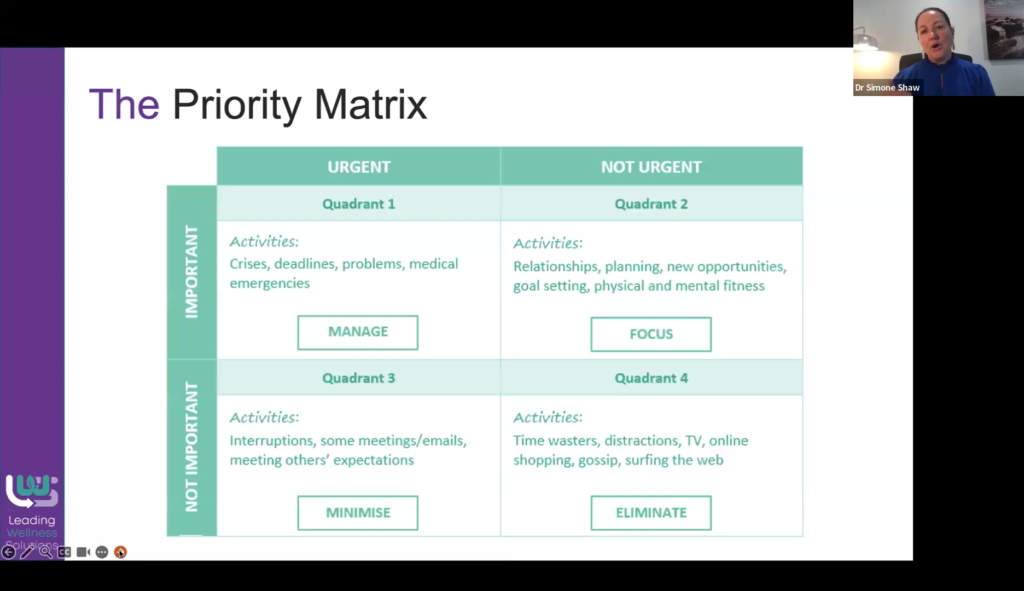
One of the most effective ways to regain control is by using the Priority Decision Matrix, also known as the Eisenhower Matrix. It categorises tasks into four quadrants:
- Important and Urgent: Focus here first (e.g., critical deadlines, crises).
- Important but Not Urgent: Schedule time for these as this is where long-term success happens.
- Not Important but Urgent: Delegate or minimise time spent here.
- Not Important and Not Urgent: Eliminate or deprioritise.
Using this framework encourages mindful prioritisation and helps break the cycle of reactionary work.
How to Deal with Stress at Work: Proven Strategies
Focus on Your Circle of Control

Not every problem is yours to fix. Identify what’s within your control, what you can influence, and what’s outside your concern. Channel your energy toward what you can change; this increases efficacy and reduces helplessness.
Set Boundaries and Stick to Them

Define start and end times for work, take regular breaks, and avoid the temptation to check emails after hours. Australia’s new “right to disconnect” legislation reinforces this healthy boundary.
Communicate Openly About Workload
Transparent conversations with managers and colleagues help redistribute tasks and set realistic expectations. Overcommunication is better than silence when it comes to workload management.
Take Regular Breaks and Leave
Breaks are not a luxury, they’re a productivity tool. The University of Illinois found that brief diversions during tasks can improve focus by up to 40% (Ariga & Lleras, 2011).
Build Emotional Awareness
Understanding your emotional triggers helps you respond rather than react. Techniques like mindfulness, deep breathing, or body scans lower cortisol levels and improve clarity.
How to Achieve Work-Life Balance

Work-life balance is deeply personal, it’s not about equal time, but equal value. Instead of striving for perfection, aim for work-life integration, where work supports rather than competes with life.
Practical Tips for Work-Life Balance:
- Schedule exercise or hobbies early in the day before work consumes energy.
- Keep lunch breaks sacred. Avoid meetings during this time.
- Set email boundaries (e.g., delay-send emails after 6 p.m.).
- Learn to say “no” assertively and practice doing it with compassion.
- Create both a to-do list and a to-stop list.
- Turn off notifications after work hours.
A global study by Microsoft (2023) found that employees with flexible work arrangements were 29% more productive and greater overall wellbeing than those without flexibility.
Organisational Strategies for Managing Workload and Stress

While individual coping strategies matter, real change happens at the organisational level. Here’s what leaders and HR teams can do:
Encourage Flexibility and Hybrid Work
Flexible work arrangements reduce burnout risk and improve retention (BCG, 2023). Even one or two days of remote work can significantly improve wellbeing.
Utilise Employee Assistance Programs (EAPs)
Employee assistance programs (EAPs) provide confidential support for stress, anxiety, and workload management but they’re often underutilised. Promote awareness and normalise their use.
Provide Quiet Spaces and Recovery Zones
Designate rooms for reflection or relaxation to give staff mental recovery time. This is especially beneficial for neurodiverse employees who need sensory breaks.
Offer Health and Wellness Initiatives
Subsidised gym memberships, yoga classes, mindfulness sessions, or short massages at work can have outsized impacts on morale and stress reduction.
Train Leaders in Psychosocial Risk Management
Equip leaders to identify and respond to stress early. Regular one-on-one check-ins and “walking meetings” create safe spaces for discussion.
Celebrate Success and Encourage Fun
Workplaces that integrate fun and recognition experience stronger cohesion and lower turnover. Even five minutes of laughter can reduce stress hormones by 30%, as Mayo Clinic researchers pointed out that laughter can be a strong medicine for releasing stress.
The Science of Stress: Understanding the Yerkes-Dodson Curve
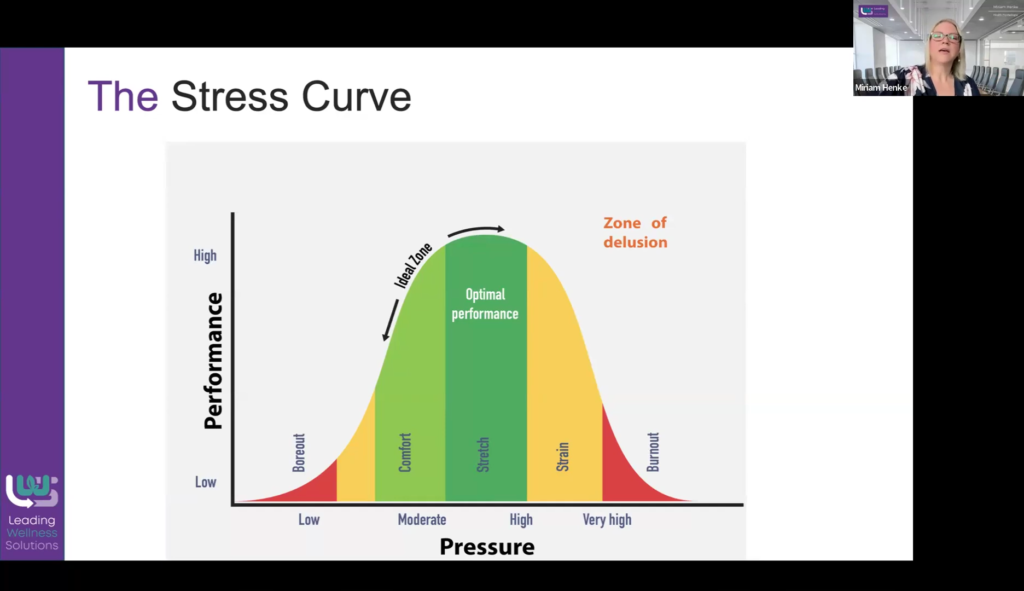
The Yerkes-Dodson Law illustrates that performance increases with stress only up to a point. Moderate pressure motivates and sharpens focus, but excessive stress causes performance to decline and eventually collapse into burnout. The key is balance: maintaining the “optimal performance zone.”
To stay in this healthy zone:
- Balance workload demands with adequate recovery.
- Build psychological resources through rest, exercise, and connection.
- Seek help early if performance or wellbeing starts to dip.
Holistic Stress Management: Your Recipe for Wellbeing

There’s no single fix for stress. True resilience comes from combining practical and personal approaches.
Workplace Strategies:
- Encourage regular breaks and flexible hours.
- Reward staff who take care of their wellbeing.
- Use positive messaging in shared spaces.
- Introduce wellbeing challenges or mindfulness programs.
Individual Strategies

- Practice mindfulness or meditation daily for 10 minutes.
- Stay physically active: movement reduces anxiety.
- Eat a balanced diet and limit alcohol.
- Get consistent, restorative sleep.
- Nurture relationships that bring joy and support.

Stress relief is cumulative; it builds over time. As we often say in our sessions: the best stress management strategy is the one you actually use consistently.
Final Thoughts: Creating Workplaces Where People Thrive
Managing workload and reducing stress at work are shared responsibilities. Leaders must design healthy systems; employees must set boundaries and practise self-care. When both align, burnout declines, engagement rises, and productivity flourishes.
Remember, balance is not a destination; it’s a daily practice. By making small, consistent changes in how we plan, communicate, and recover, we can create workplaces where people thrive rather than survive.